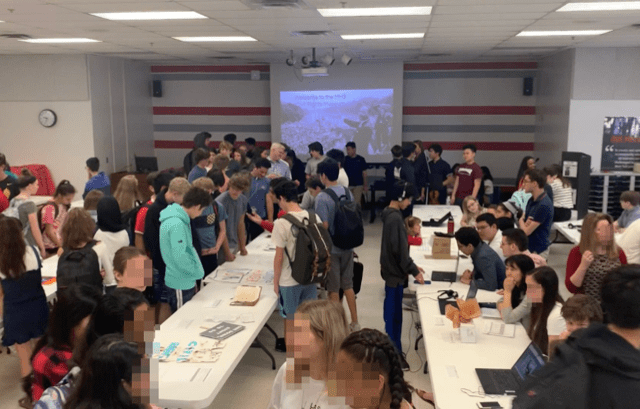
Our First Exhibition of Learning

Students in US/VA History had the chance to share their learning with a new audience this week, and I wanted to share about the experience because it meant so much to them!

The Project
Three of my amazing colleagues (Julia, Emer, and Laura) developed this project on the Civil Rights Movement, centered around the question:

How have ideas of freedom and equality in the United States changed over time?

Students were tasked with creating an exhibit for a Civil Rights Museum that would cover a specific topic within the broader Civil Rights Movement in the United States. Students had freedom to choose a topic that they were interested in and create something of their choosing that could teach an audience about their topic.

“Because of this project, I’ll still know this years from now.”

Sid, 11th grade student

The Exhibition
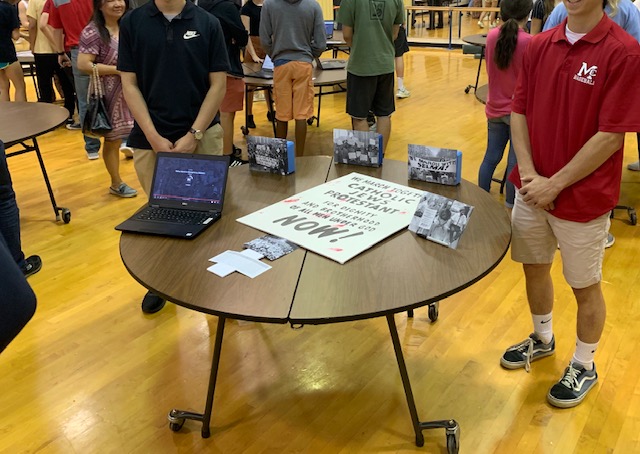
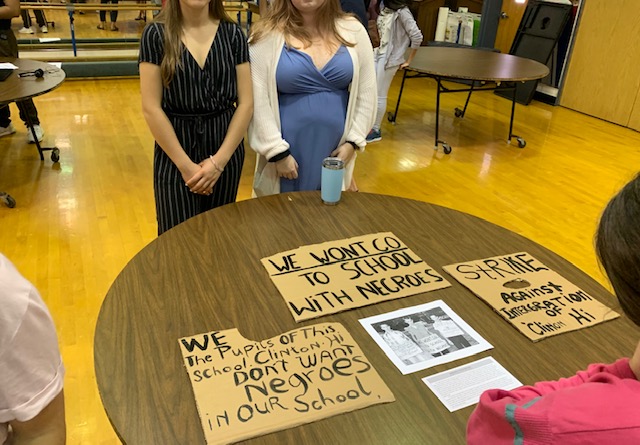
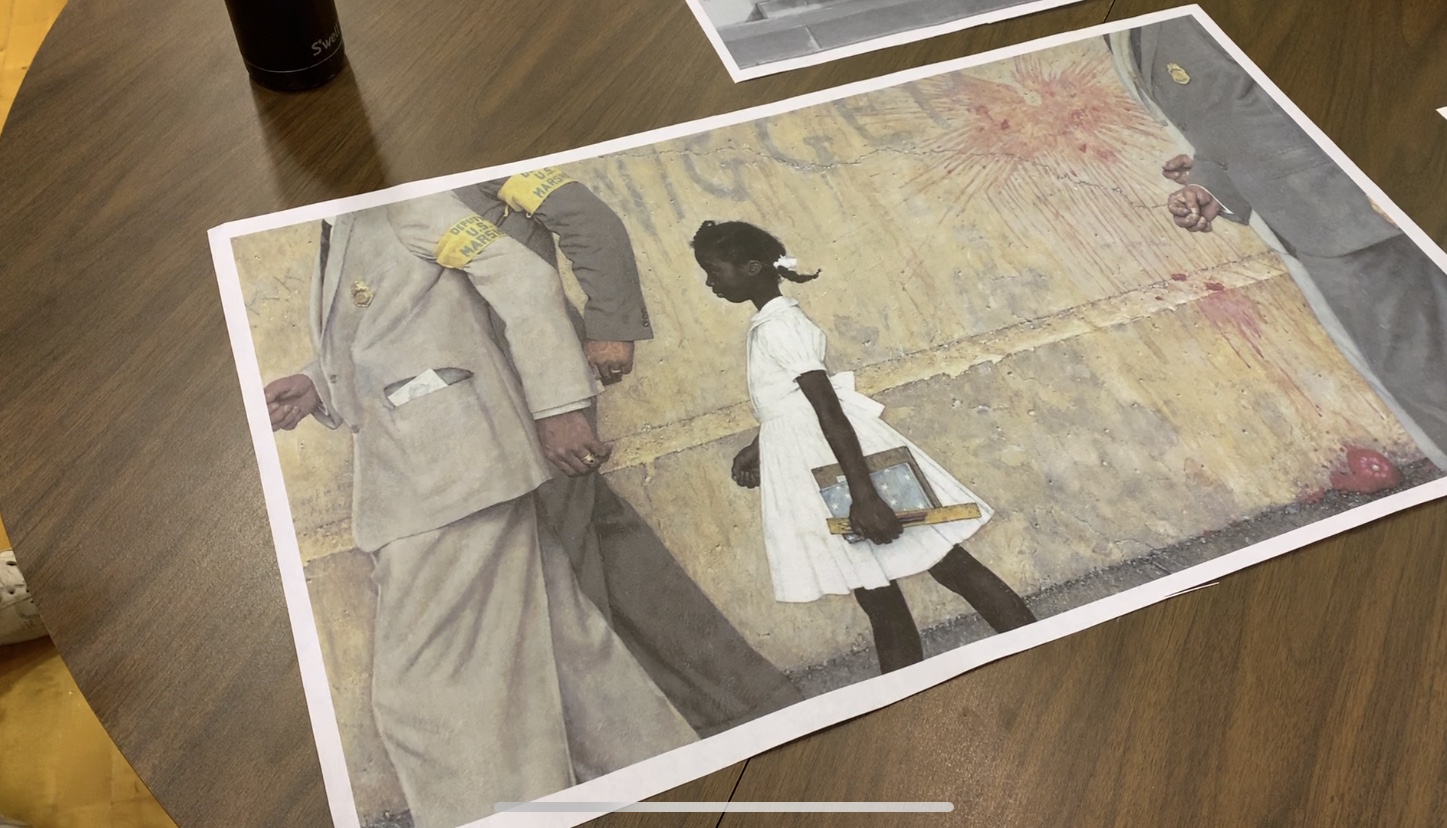
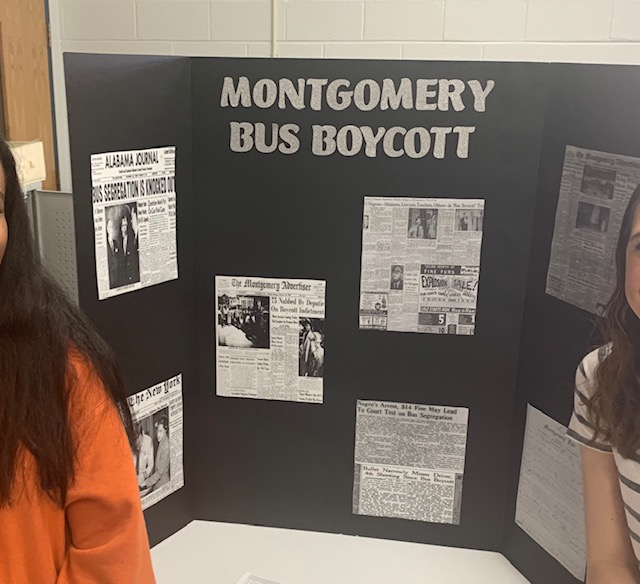
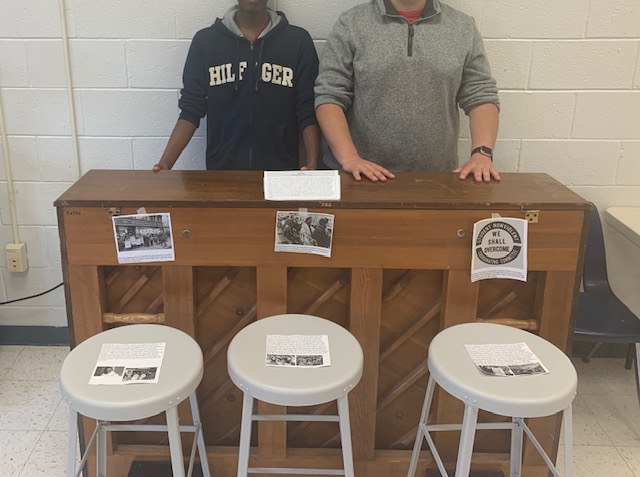
It worked out that we were able to reserve a space in our school big enough for students to present their museum during class time, and we invited in the school, parents, and other people within the county to view their exhibits. Students in my class felt really motivated by the fact that their parents and peers and other teachers were going to view their exhibits, and wound up making exhibits that they were excited about and really proud of. The adults that came in were able to interact with the students, and ask them thought-provoking and difficult questions about what they learned, which really helped push the students to think in greater depth about what they had created. Check out some of the exhibits below!
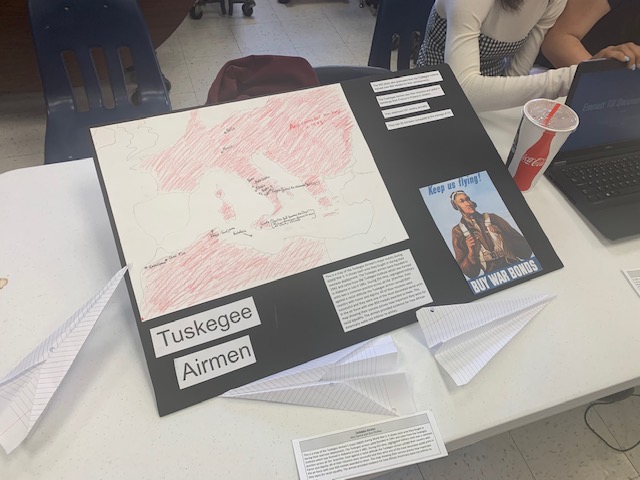
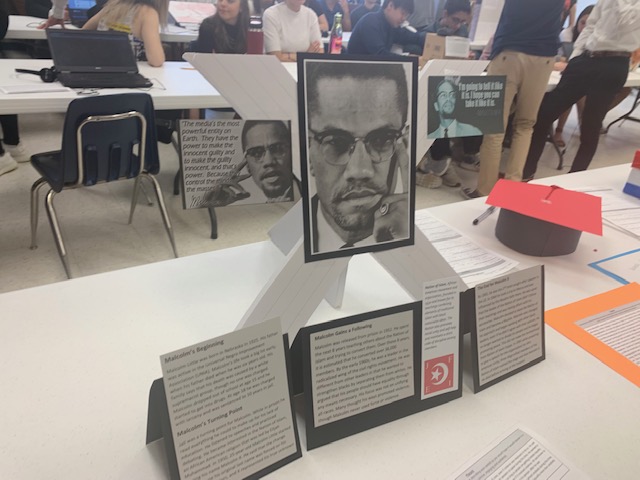
Seeing my classmates work made me understand the value of life. I have great compassion for those who put their lives on the line to have their voices heard.

11th grade student

Takeaways from this Experience
I felt so intimidated by an idea of putting together an exhibition of learning. I always thought I didn’t have enough time, or that it needed to be fully planned out months in advance to be effective. I put this together in a week.  ONE WEEK! I took the day that was planned on our schedule to present the projects in class, got a bigger space, and invited in more people. It was that easy and my students got so much more out of it! Are there things that I want to refine and change about how I implement this project in the future? Absolutely. But the biggest takeaway for me was that I shouldn’t be so intimidated by planning an exhibition of student learning. The reward for the students was well worth the (pretty minimal) work that went into getting everything to come together.

“I was more intrinsically motivated by this project. I wanted to make something I was proud of.”

Elly, 11th grade student

Materials
If you teach US/VA History in Fairfax County, feel free to check out the project guidelines here! Or email me if you are in another district and I would be happy to share. Also, please check out the resources available through Share Your Learning and sign-up today to commit to having your students share their learning!
Now What?

Deeper Learning 2019, an education conference held at High Tech High in San Diego, changed my life. It was a spiritual awakening that made me reevaluate everything I thought I ever knew about what it means to be an educator. It also inspired me to believe in myself as a disruptor and a change-maker. I am a public high school teacher in one of the largest school districts in the country, and I’m writing this blog as a window into the journey I’m about to take. Here’s where I’m at right now…

I believe that it is our desperate and urgent job to re-imagine school and make big changes to our education system. Technology is pushing our world forward at such a rapid pace, and much of schooling is based on antiquated ideas about rote memorization of designated content instead of building and developing skills. With the technological advances of the 21st century, the soft skills are the important ones. Critical and creative thinking. Problem solving. Curiosity. Asking open ended questions. And getting students those skills by empowering them to learn, instead of “teaching” them. And creating spaces where students feel safe to try things, fail at them, then try them a different way.

We need to flip education on its head with regards to recognizing success. What does success look like? How do we measure it? As educators in a field that is predominantly white teaching a community of students that increasingly isn’t, are we fully appreciating and celebrating the successes of students of color? Even when their performance doesn’t mold to normative white culture? We need to ensure that school is helping to recognize the spark and magic inside all of our students and push our students to be free to embrace their whole selves. How are we defining success right now? Are we defining it based on behavior? Adherence and ability to play the game of school? Or are we helping each student become the very best version of their amazing unique selves?

We need to appreciate and love and recognize each of our students as full people. Each student that comes into our classroom has a whole life full of experiences, and their own individual set of circumstances that makes them who they are. Each of them brings so much that we can learn from. We need to listen to and respect our students. Listen to them when they say why they did something the way they did (or didn’t do something they were supposed to). Respect them and their time with the amount of work we are giving them outside of the classroom. Respect them by giving them tasks that will help them grow those important skills, and letting them understand the why behind what they’re doing.

Self-work is critical to being a successful educator. Spending the time to work on myself and reflect and question and call out my own BS and reflect and adjust some more is vital. If I can’t be completely open and real and comfortable with myself, how can I ever develop that confidence in students? As educators, we need to be vulnerable. We have to be vulnerable enough to let our students know when we struggle. The more open and real we are with our students, the more they will see us as a position of safety and feel safe enough to really open up. That’s where the growth is going to happen.

I just want to be clear that there are SO many educators that I know who are already doing so many of the awesome things that I’m talking about here. I see them in my building, in my district, on my Twitter feed. I am in awe of them and I respect them and I appreciate them. I lean on them for guidance and support when I (often) need it!

So now what? Now I’m going to start by trying to re-imagine what my US History course could be. I know this is personally an area where there is major room for growth for me to become the educator I can be, and I’m supported by a great collaborative team of teachers who I am excited to learn from. My vision is to build a course around project-based learning and student inquiry with authentic assessments that are centered around growth and skills. I want to figure out how to completely throw out multiple choice testing, while figuring out what meaningful assessments can take that place (And that don’t take so much time to grade that I’m prevented from having a life of my own). How does that work? And what does it look like when right now I have 158 students? And how can I build in opportunities for the students to showcase their learning?

I’m super inspired and nervous and overwhelmed and scared and excited about all of the ideas I have and how to actually turn them into something concrete, so I hope this blog can be a little window into the process of now what.